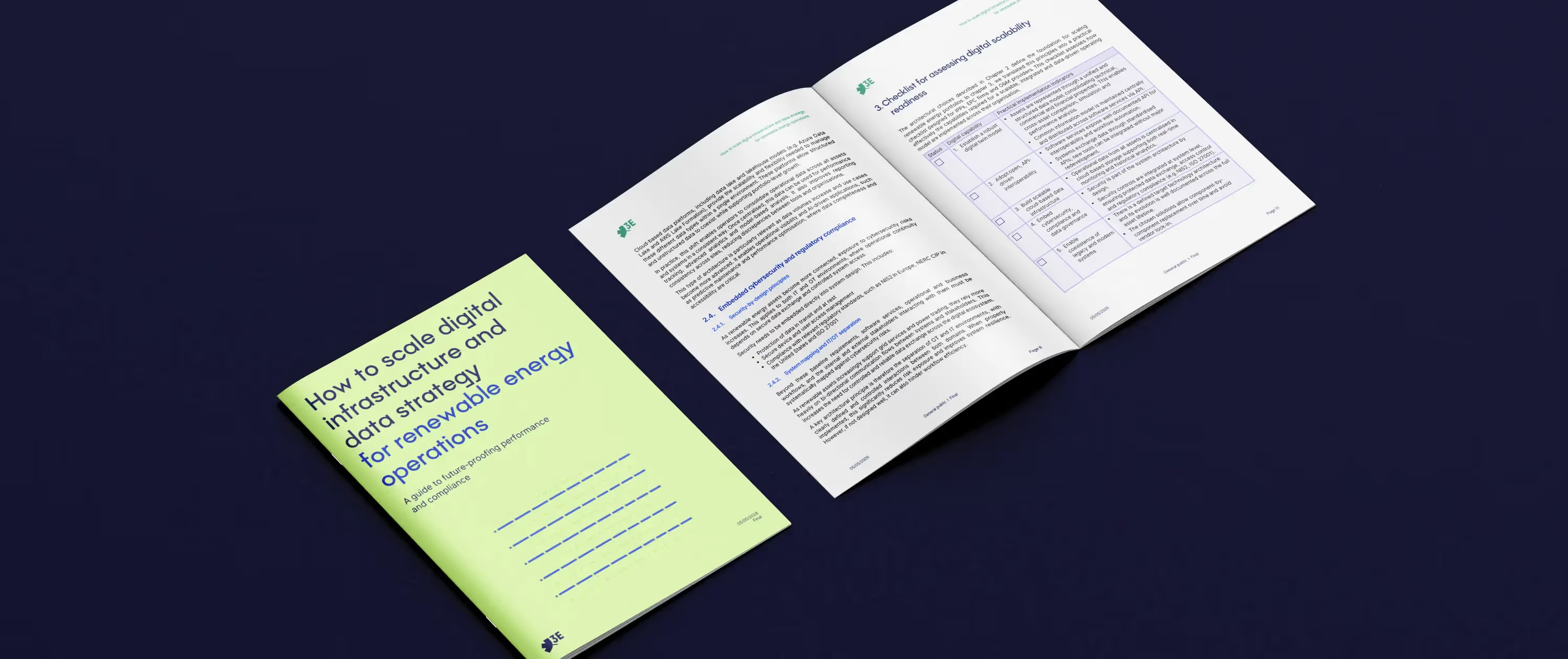
A guide to future-proofing performance and compliance
Renewable energy portfolios are growing fast. Assets are operating longer, markets are becoming more dynamic, and regulatory pressure continues to increase. Yet many renewable operators are discovering that scaling capacity is no longer only an engineering or financing challenge. It is also a digital architecture challenge.
Why renewable energy operators struggle to scale digital infrastructure
Across the industry, digital landscapes have often been built system by system. Organisations implement systems to solve specific operational needs, combining platforms such as SCADA, APM, CMMS, ERP and trading tools. While each system performs its function well, together they rarely form a coherent digital architecture.
As a result, most operators face the same structural limitations:
- Data exists but remains difficult to use consistently
- Portfolio-wide visibility is limited
- System integrations multiply and become costly to maintain
- New digital initiatives require more integration work than enable innovation
- Earlier technology decisions gradually start constraining flexibility and scalability
The problem is coming at the core from the absence of a scalable digital architecture connecting these systems.
As portfolios grow and become more complex, this fragmentation becomes more visible, because data must be exchanged across systems to support portfolio-wide operations. Functions such as performance optimisation, predictive maintenance, grid services, reporting and cybersecurity increasingly rely on consistent data flows and controlled interoperability between systems.
Simply adding new software no longer solves the problem. Without clear architectural principles, complexity increases faster than operational value. This is the challenge addressed in our guide: how to build digital infrastructure and data strategy that can scale with renewable energy operations.
5 digital architectural principles for scaling renewable energy operations
The guide presents practical lessons learned from supporting renewable asset owners and operators scaling their digital environments. It focuses on five key design principles:
- Digital twin–centric architecture to create a consistent information layer across systems
- Open, API-driven interoperability enabling automation and workflow integration
- Cloud-based data platforms capable of handling growing operational data volumes
- Embedded cybersecurity and compliance, integrated from the start rather than added later
- Architectural flexibility that allows legacy and modern systems to coexist and evolve over decades
Together, these principles form what we call a scalable digital backbone, i.e. an environment where systems, data and workflows evolve without constant re-engineering.
A practical checklist to assess your renewable energy digital maturity
To make this tangible, the guide includes a practical checklist that helps IPPs, EPC firms and O&M providers assess whether their current setup truly supports portfolio-scale operations.
The checklist translates architectural concepts into observable implementation indicators, allowing teams to identify gaps, prioritise improvements and align IT, OT and business stakeholders around a common direction.
Who should use this renewable energy digital infrastructure guide
This guide is written for executives and technical leaders at IPPs, EPCs and O&M organizations responsible for:
- Scaling renewable portfolios
- Modernising operational systems
- Improving data governance and reporting reliability
- Preparing organisations for long-term digital evolution
If your organisation is expanding faster than its digital infrastructure, or if integration work increasingly dominates digital projects, this guide provides a structured way to rethink the foundation.
Download the guide to assess your digital architecture against a practical checklist and identify what is needed to move from fragmented systems to a scalable digital backbone.